8:00 am - 5:00 pm - Mon - Sun

Please fill out the form below and we will get back to you as soon as possible.
8:00 am - 5:00 pm - Mon - Sun

I
Roofing in Grand Prairie
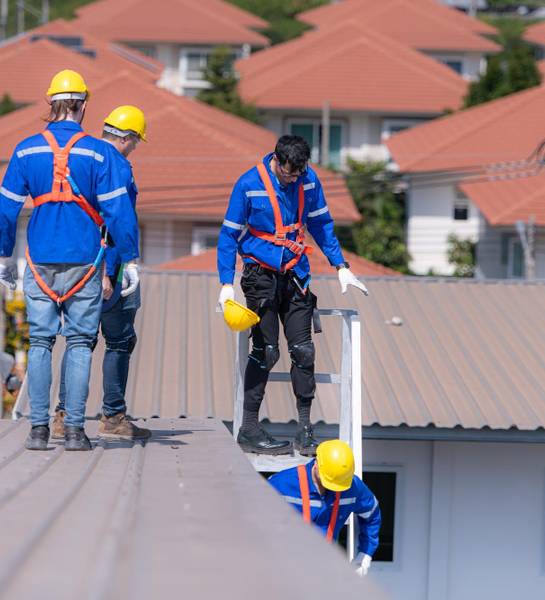
Roofing in Grand Prairie requires practical planning, careful installation, and materials selected for local conditions. Contractor partners serving Grand Prairie work with lake-adjacent communities, established homes, and warehouse properties. Recommendations account for wind-driven rain, hail, heat, and moisture around roof penetrations, along with the roof's age, slope, drainage, and previous repairs.
Inspection findings are considered alongside building use, roof geometry, drainage, and material compatibility before a scope is developed.
A durable assembly uses compatible underlayment, flashing, ventilation, and surface materials such as shingle systems, metal panels, commercial coatings, and improved flashing.
II
Serving Grand Prairie
VII
Roofing FAQ
Useful answers for homeowners, landlords, and commercial property managers in Grand Prairie.
A roof should be reviewed soon after hail, high winds, or signs of interior moisture. Early documentation can reveal lifted materials, punctures, loose flashing, or drainage problems before the next storm makes them worse. This is especially relevant where lake-adjacent communities, established homes, and warehouse properties are exposed to wind-driven rain, hail, heat, and moisture around roof penetrations.
Often, yes. A localized leak may come from flashing, a vent, a small damaged area, or failed sealant. A complete replacement is usually considered when damage is widespread, the roof is near the end of its life, or the deck has broader deterioration. In Grand Prairie, the decision should also account for wind-driven rain, hail, heat, and moisture around roof penetrations.
Balanced intake and exhaust ventilation helps manage heat and moisture. It can reduce stress on roofing materials, support indoor comfort, and limit condensation that may affect decking or insulation. A local evaluation is useful because lake-adjacent communities, established homes, and warehouse properties can have very different roof details.
No. Some hail damage is subtle and may affect shingle mats, metal components, vents, or flashing without creating an obvious leak right away. A close inspection is the safest way to understand the condition. The goal is to protect the property while preserving a system that still has useful service life.